



Noise control
What is meant by noise control?
Noise control refers to all measures taken to reduce or prevent disturbing noise. The aim is to reduce noise pollution for people and to create a more pleasant environment in which to live, work or spend leisure time
Depending on the cause of the noise, different sound insulation measures are used.. Noise can be reduced directly at the source, dampened as it travels, or attenuated at the point of reception. The right solution always depends on the specific noise source and the structural conditions.
Why is noise control important?
For many people, noise is part of everyday life. Road traffic, noisy neighbours, household appliances or machinery can significantly impair well-being. Constant exposure to noise can lead to stress, concentration problems or sleep disturbances and significantly reduce living comfort.
Targeted noise control measures can often significantly reduce noise pollution and improve indoor environment quality in the long term.
What options are available for noise control?
There are essentially three approaches to effectively controlling noise:
Reducing noise at the source
The most effective measure is to reduce noise at the point where it is generated. This can be achieved, for example, through the use of quieter equipment, vibration-isolated machinery or vibration-damping materials.
Attenuating sound as it travels
If the sound source cannot be altered, the propagation of sound can be reduced. Sound-insulating wall structures, heavy-duty foils or soundproof cladding are used for this purpose. These make it more difficult for sound to travel into neighbouring rooms.
Improving room acoustics
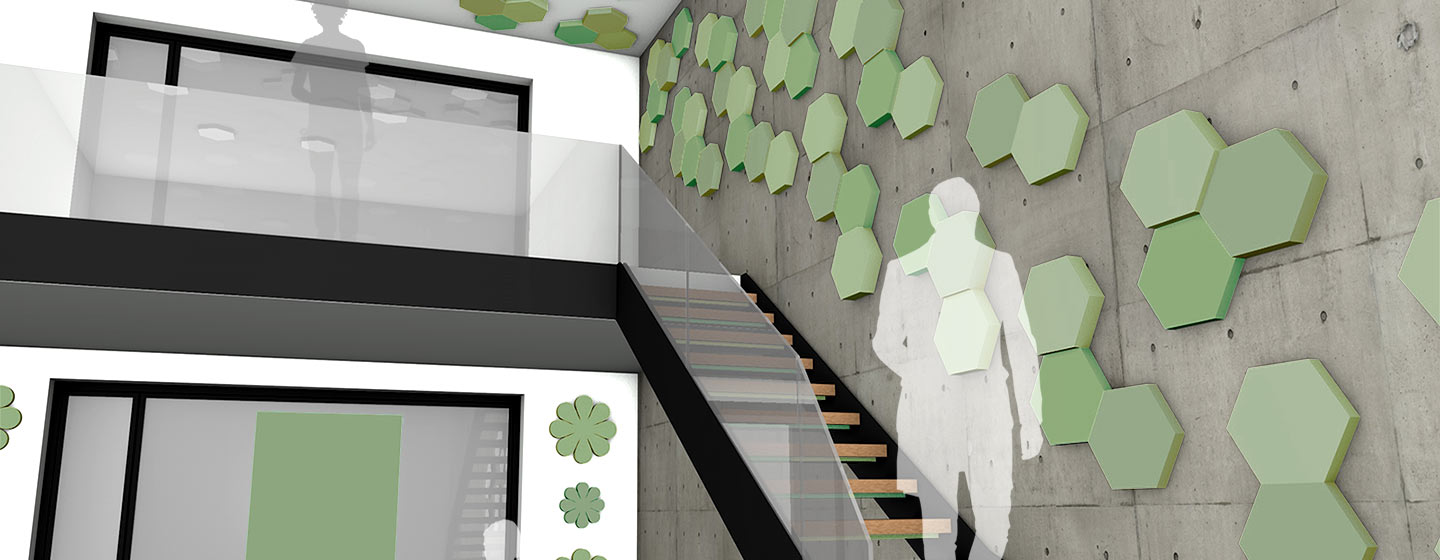
Not all disruptive noise comes from outside. In many rooms, unpleasant sounds are caused by excessive reverberation. Acoustic panels, acoustic foam or suspended ceiling panels absorb sound and ensure more pleasant room acoustics.
Which materials help to control noise?
A range of soundproofing materials is available for effective noise control. The most suitable solution depends on the specific application.
Typical materials include:
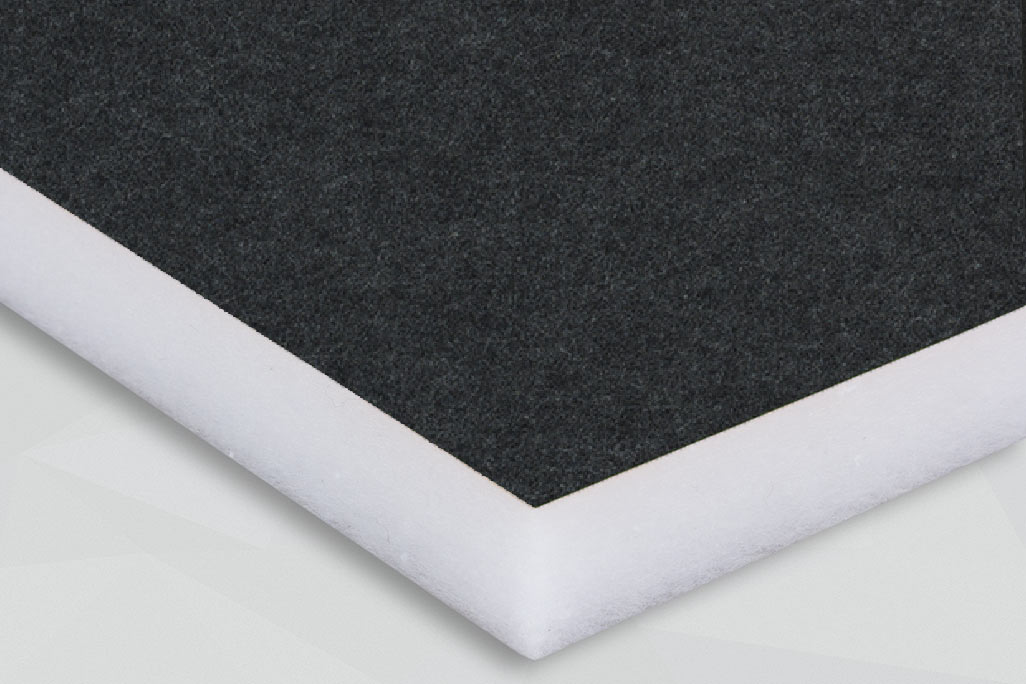
• Acoustic foams to reduce reverberation
• Heavy-gauge foils to improve sound insulation
• Acoustic fleeces for wall and ceiling structures
• Decoupling materials to combat structure-borne noise
A combination of different materials often achieves the best results.
Noise control in the home
In the home, there are numerous situations where soundproofing measures are advisable.
These include, amongst others:
• Road and traffic noise
• Music or conversations from neighbouring flats
• Home cinemas and gaming rooms
• Heat pumps and air conditioning systems
• Washing machines and tumble dryers
• Hobby rooms and workshops
• Echoey living and office spaces
With the right soundproofing solutions, noise levels can be significantly reduced in many cases..
Noise control in commerce and industry
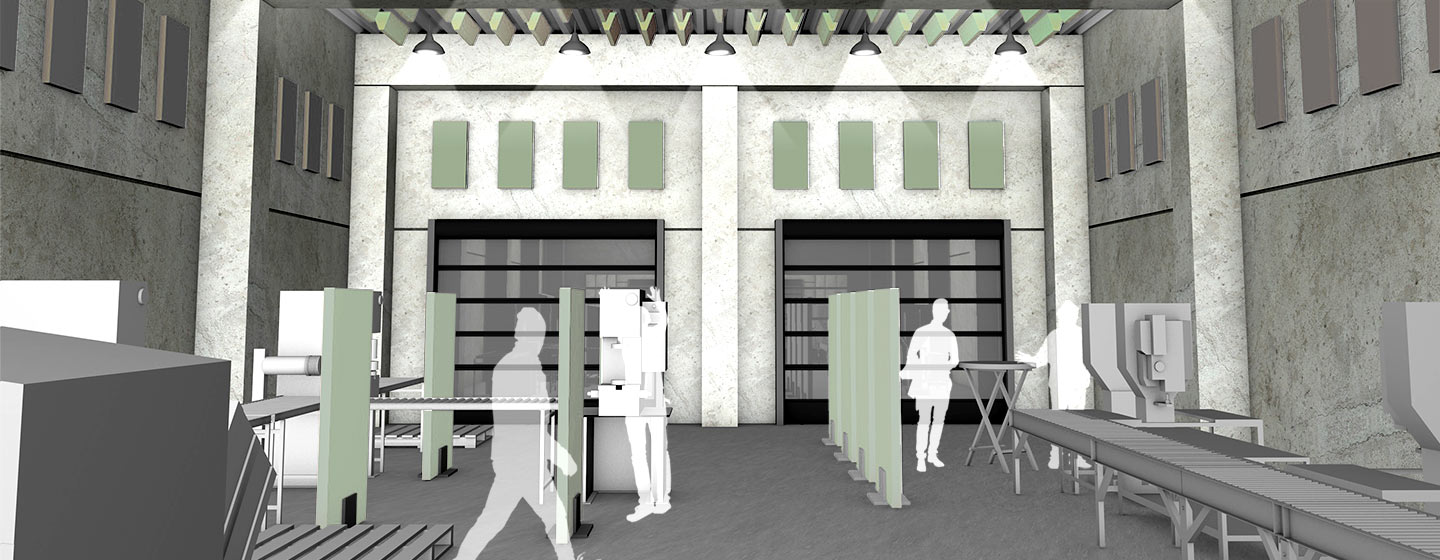
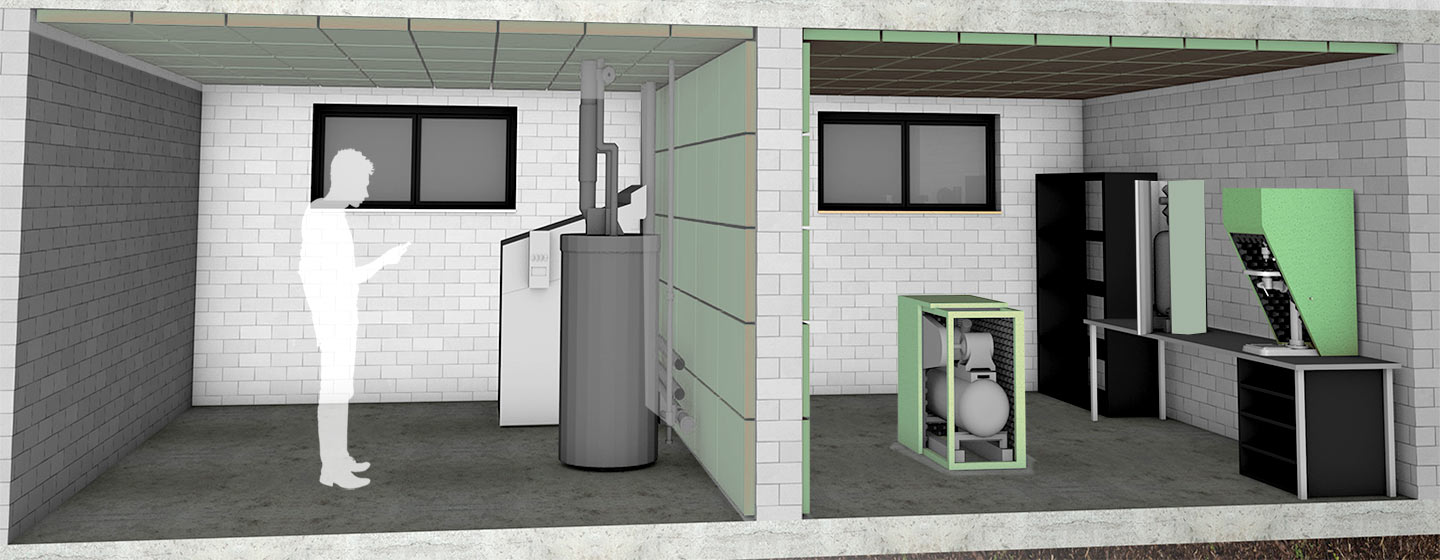
Noise control also plays an important role in workshops, production halls and plant rooms. Machinery, ventilation systems and compressors often generate high noise levels. Sound-insulating enclosures, sound-absorbing cladding and the decoupling of machinery can effectively protect both staff and the surrounding area from noise.
Conclusion
Effective noise control not only improves comfort at home and at work, but also contributes to a more pleasant and quieter environment. Whether it is traffic noise, machinery, neighbours or rooms with echoes – with the right soundproofing measures, many sources of noise can be specifically reduced. The key is to identify the cause of the noise and to use the appropriate combination of sound insulation and sound absorption.
Frequently asked questions about noise control
What is the difference between noise control and sound insulation?
Noise control refers to all measures taken to reduce noise. Sound insulation is a sub-category of noise control and encompasses technical solutions for sound insulation or sound absorption.
Which measure is most effective?
The most effective approach is to reduce noise directly at the source. If this is not possible, sound-insulating or sound-absorbing measures along the path of sound propagation can help.
Which materials are suitable for noise control?
Depending on the application, acoustic foams, heavy-duty films, acoustic fleeces, decoupling materials or specialised soundproofing systems are used.
Does acoustic foam help against all types of noise?
No. Acoustic foam mainly improves room acoustics and reduces reverberation. If sound transmission through walls or ceilings is to be reduced, sound-insulating materials are required.
Can noise be completely eliminated?
Complete silence is usually unachievable. However, with a well-thought-out combination of sound insulation and sound absorption, noise levels can often be significantly reduced.
How do I find the right solution?
Firstly, you should identify where the noise is coming from and how it is transmitted. Only then can the appropriate soundproofing material be selected.
Content: 0.5 m² (€71.80* / 1 m²)
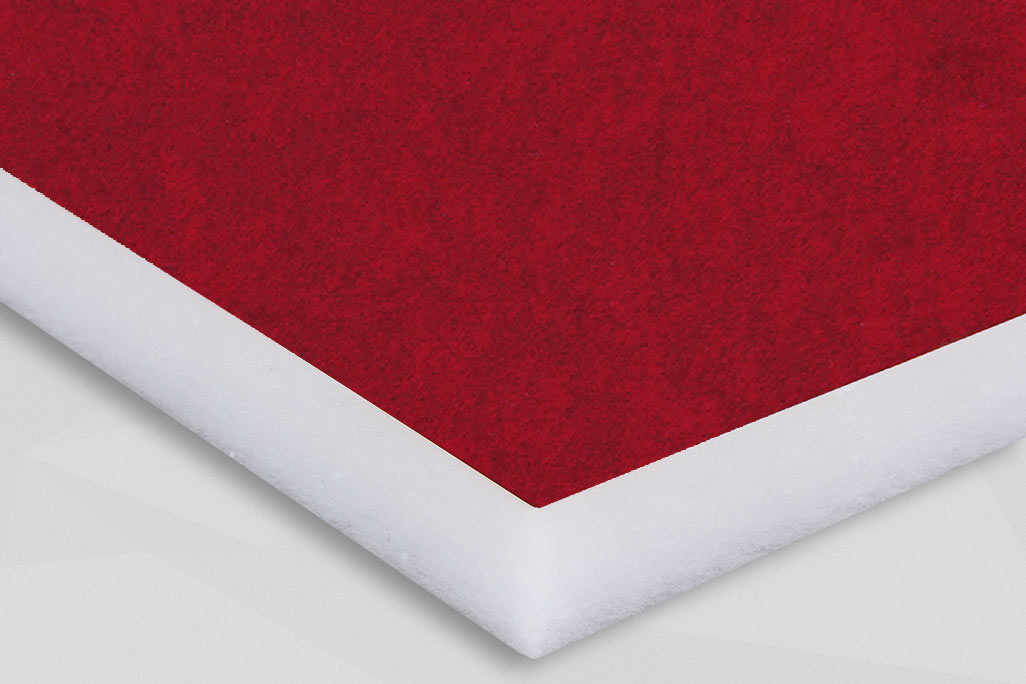
Content: 0.384 m² (€67.19* / 1 m²)
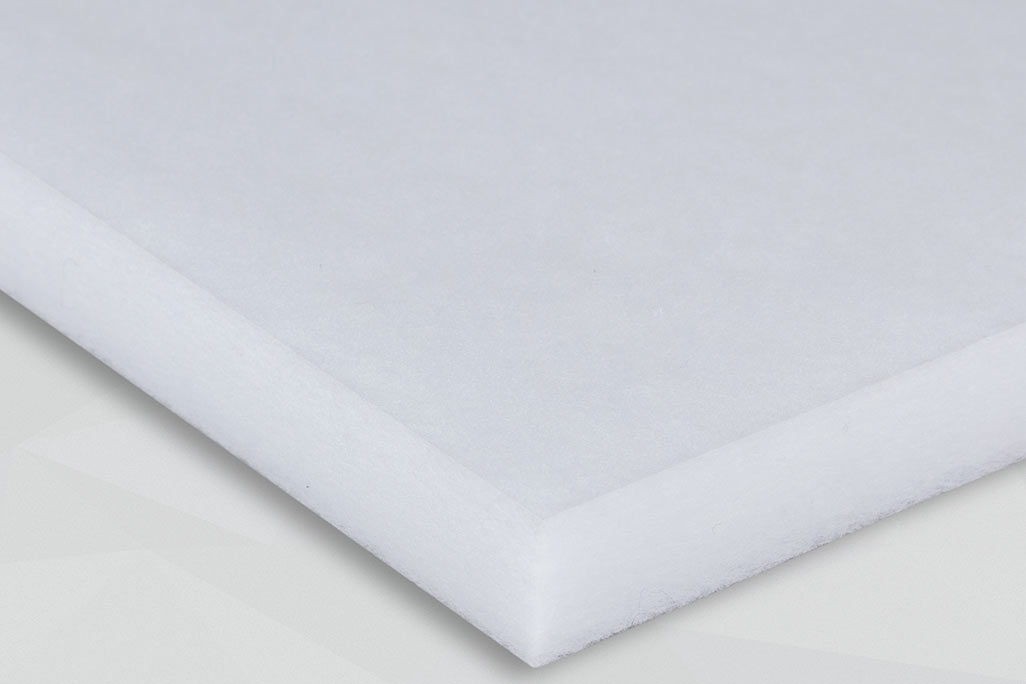
Content: 0.5 m² (€35.80* / 1 m²)
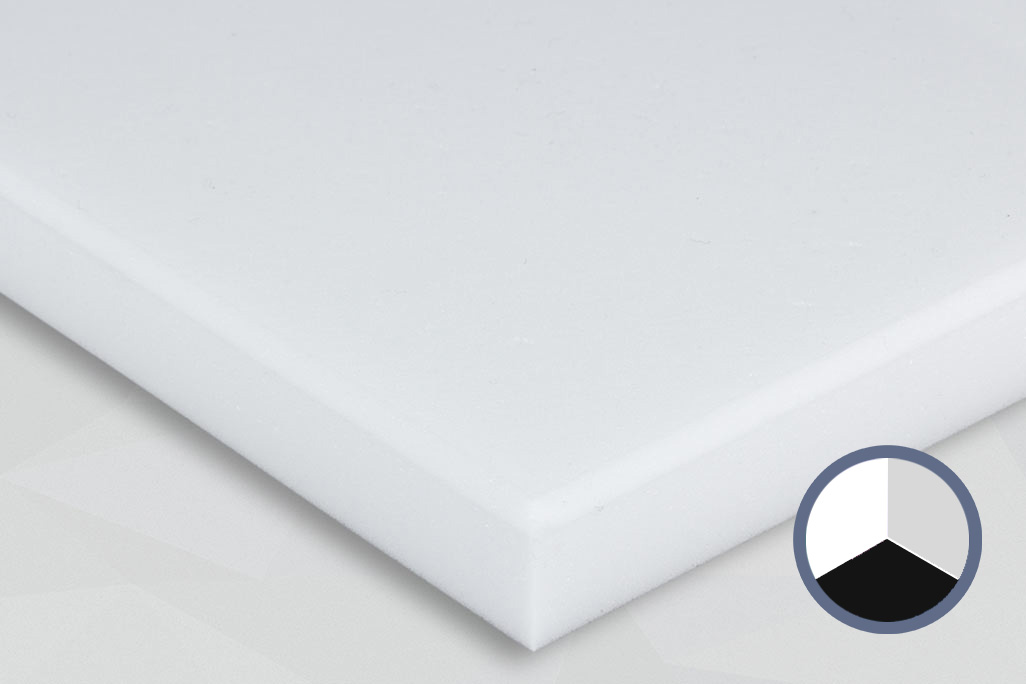
Content: 0.5 m² (€0.00* / 1 m²)