



Foam
Foam materials are versatile materials that are used, among other things, for sound absorption, sound attenuation and acoustic optimization. Due to their different material properties, pore structures, densities and shapes, they are suitable for a wide range of applications – from technical acoustics and mechanical and vehicle engineering to room acoustics.
Open-cell acoustic foams in particular are used to absorb sound energy and thereby reduce reflections and reverberation. They are used, for example, in machine housings, cabins and enclosures, vehicles, technical equipment, as well as in offices, recording studios, workshops and other rooms.
How do foam materials work?
The acoustic performance of a foam depends largely on its cell structure. With open-cell foams, sound waves can penetrate the material. The resulting air movements are attenuated by friction within the pores. Part of the sound energy is converted into heat in the process.
In this way, an acoustic foam can reduce sound reflections in a room or within a technical construction. This can reduce reverberation and noise levels and specifically improve the acoustic properties.
The extent to which a foam absorbs sound depends, among other things, on the material, thickness, pore structure, density, surface and frequency range. Thicker or specially structured materials can, for example, have a different absorption effect than thin foam layers.
Sound absorption and sound insulation
Foam materials are often associated with the term “sound insulation”. From an acoustic perspective, however, a distinction must be made between sound absorption and sound insulation.
Sound absorption reduces sound reflections within a room, housing or enclosure. It helps, for example, to reduce reverberation and create a more pleasant acoustic environment.
Sound insulation, on the other hand, reduces the transmission of sound from one area to another. Put simply, the materials used form a kind of “sound barrier” that slows down the sound along its transmission path. This may require heavy layers such as mass-loaded membranes, multilayer composite systems or structural decoupling. Foam materials can be part of such combined soundproofing systems.
Which types of foam are used for acoustic applications?
Depending on the application, different types of foam are used.
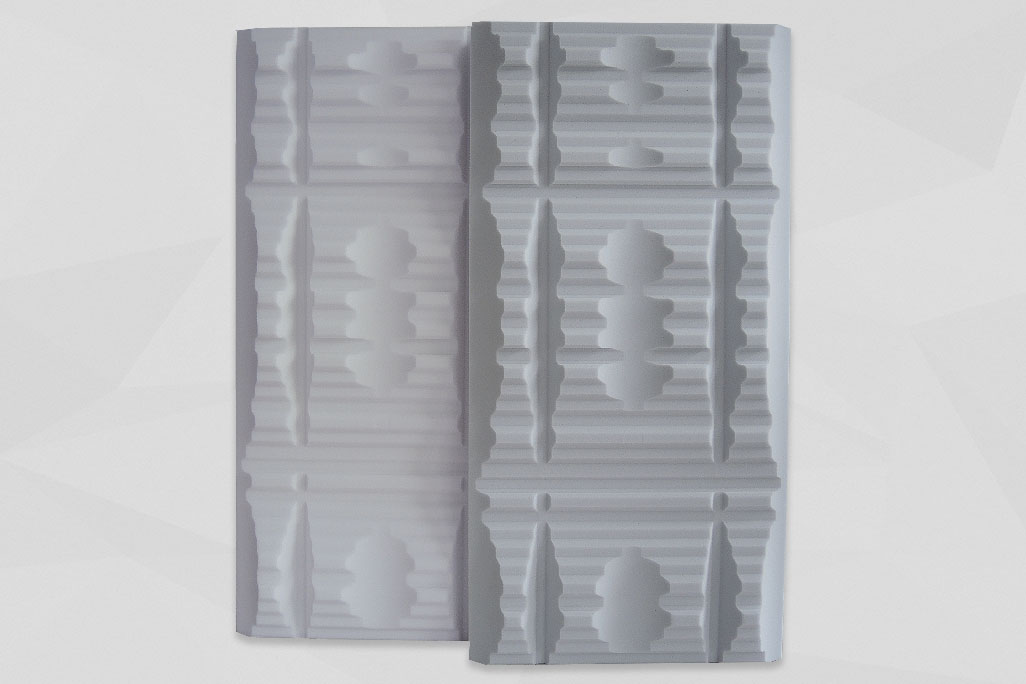
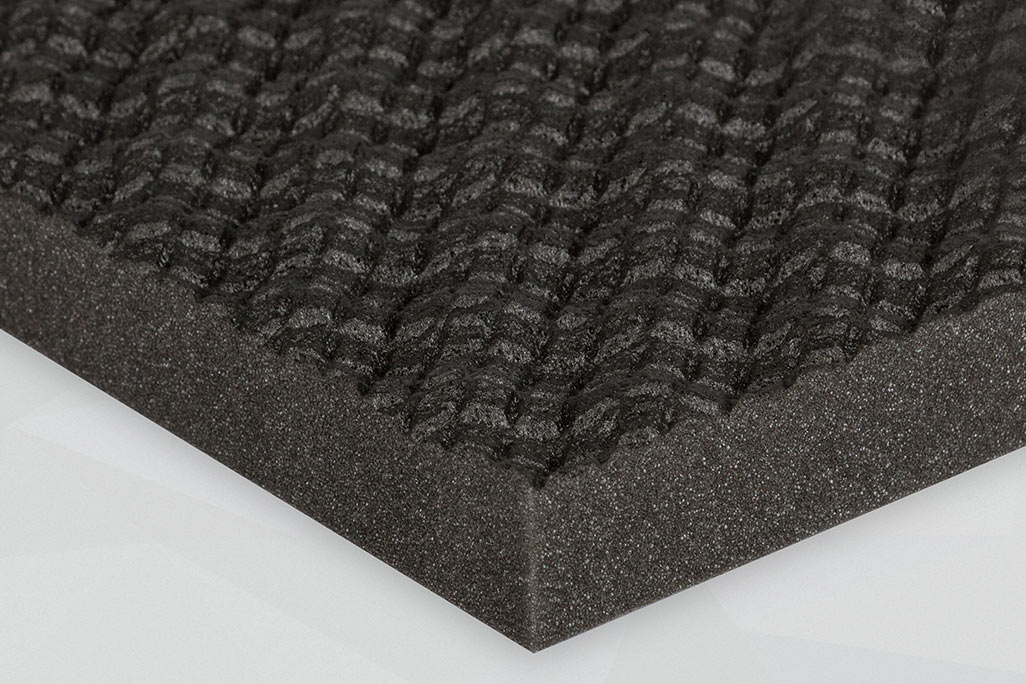
Polyurethane foams (PUR) are widely used due to their open-cell structure and good sound absorption properties. They can be used, for example, for the acoustic lining of machines, housings, cabins or rooms. The soni WAVE convoluted foam, in particular, offers very good acoustic properties.
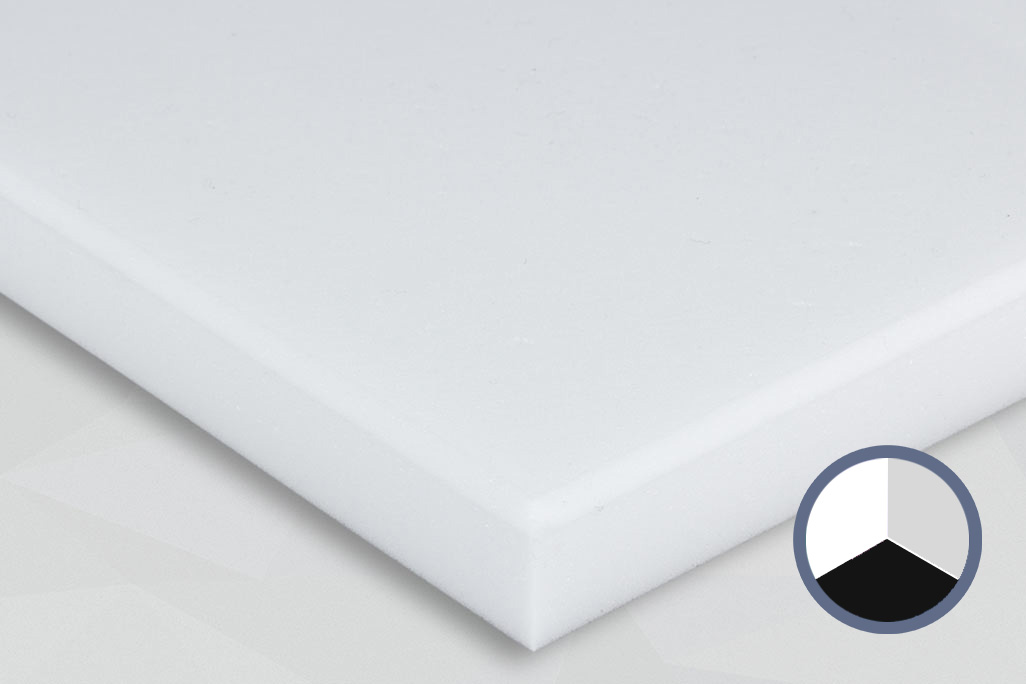
Melamine resin foams are characterized, among other things, by their low weight and good acoustic properties. Depending on the design, they are also suitable for applications with increased requirements regarding fire behavior. At soniflex, melamine resin foam is available under the product name soni PROTECT in three colors: white, light grey and black.
Composite foams consist of interconnected or combined foam structures. Depending on their design, they can provide not only acoustic properties but also contribute to vibration reduction. At soniflex, corresponding solutions can be found, for example, in the products soni 491 STL and soni COMPOSITE.
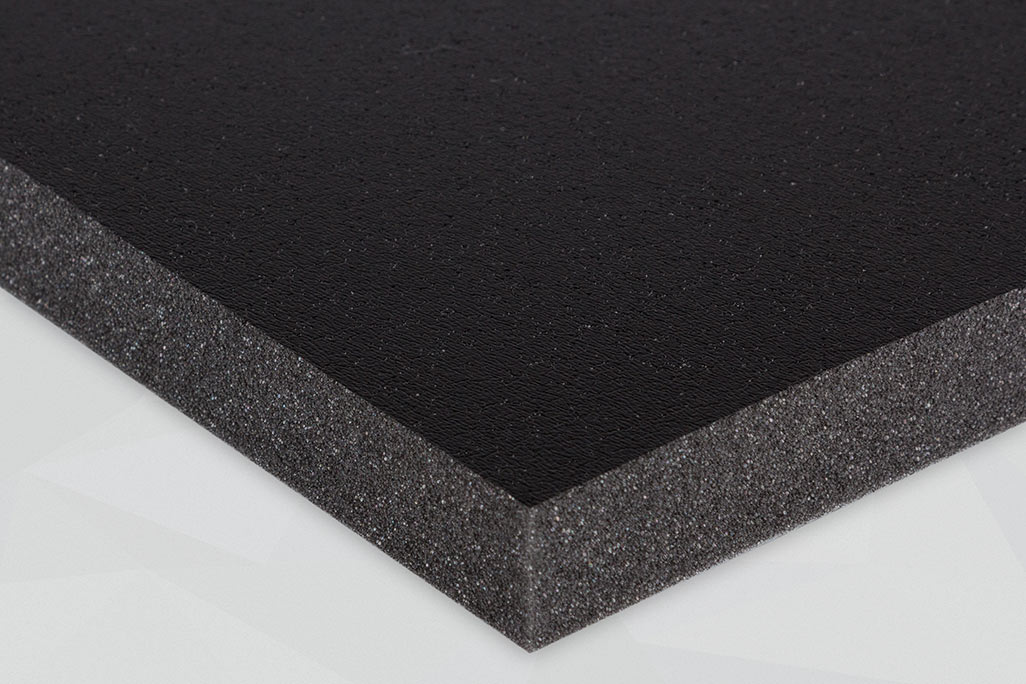
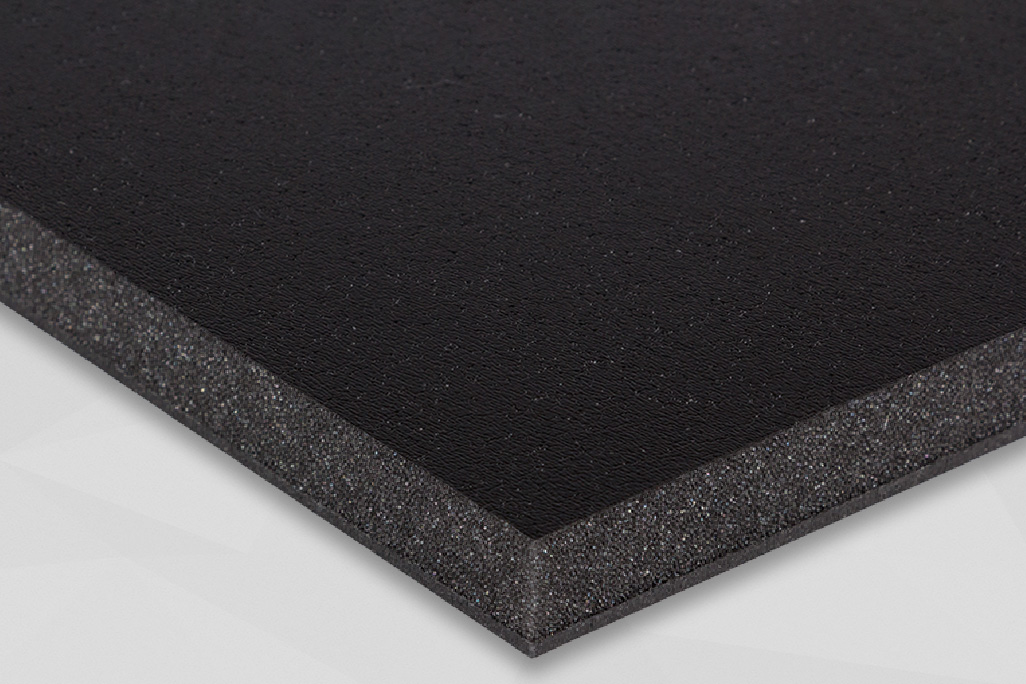
Coated or laminated foams can be used for applications where additional requirements apply to the surface, mechanical load-bearing capacity or resistance to specific environmental conditions. At soniflex, products such as the soni 491 with a black film finish are available for this purpose.
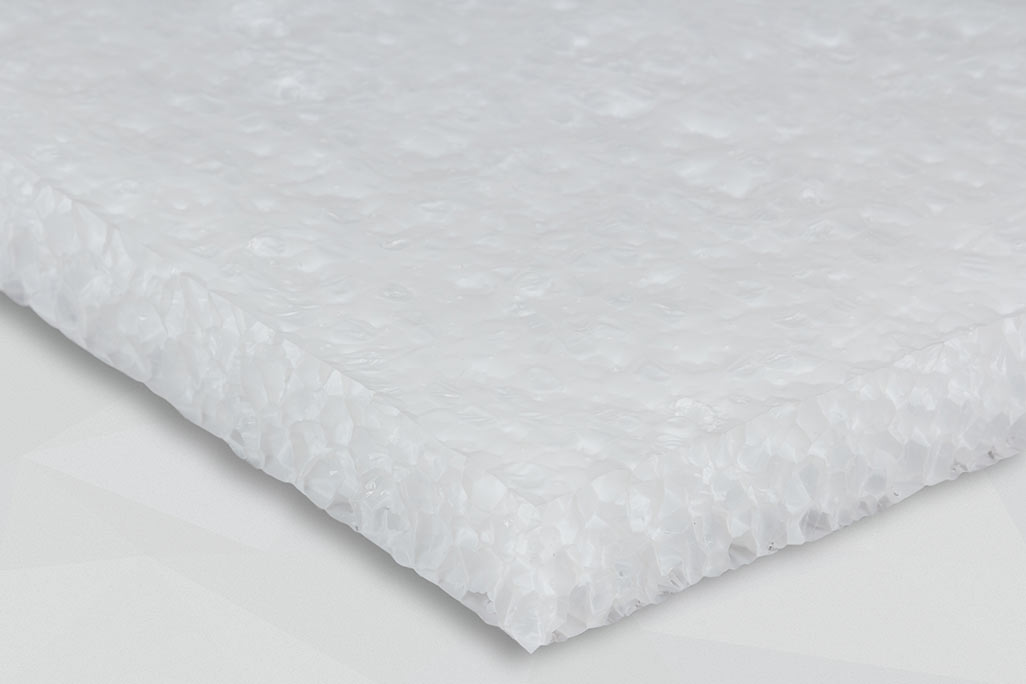
There are also closed-cell foams, such as foams made of polyethylene (PE). Due to their cell structure, these materials have different properties from open-cell acoustic foams and are used, among other things, for seals, decoupling, cushioning or structural insulation applications. At soniflex, closed-cell PE foam is available, for example, as soni RESIST in black and white.
Properties of acoustic foams
Depending on the material and design, acoustic foams can combine various properties:
• Sound absorption: Reduction of reflections and reverberation
• Low weight: Suitable for applications with limited installation space or weight restrictions
• Flexibility: Adaptation to different geometries and constructions
• Variety of : Different surfaces, pore structures, thicknesses and densities allow adaptation to various acoustic requirements
• Combinability: Can be combined with other materials for complex soundproofing applications
• Additional functions: Depending on the material, properties such as fire performance, temperature resistance or chemical resistance may also be required
The properties that can actually be achieved always depend on the specific material design and the respective application.
Where are foam materials used?
Acoustic foams are used in numerous areas.
Machinery and Industry
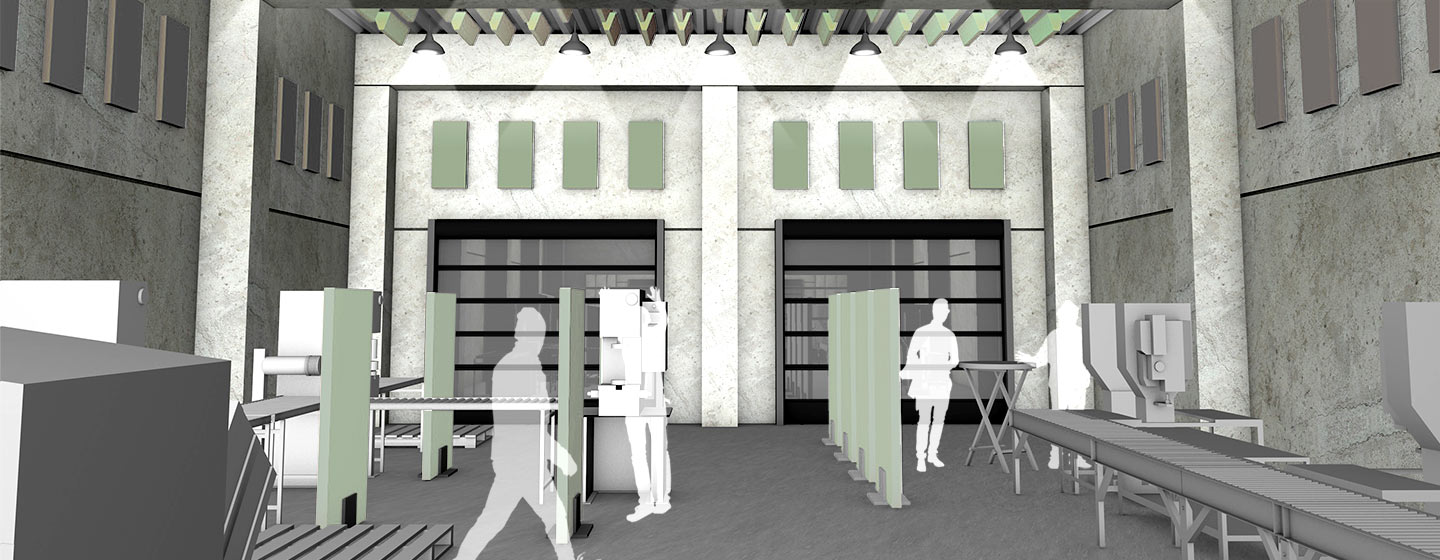
In machine rooms, housings, hoods and enclosures, foams can be used to absorb sound. They help reduce reflections within the construction and lower operating noise.
Vehicles and Rail Vehicles
In vehicles, acoustic foams are used, among other areas, in engine compartments, technical areas and passenger compartments. They can help reduce engine, drive and operating noise and increase acoustic comfort.
Construction and Agricultural Machinery
Construction and agricultural machinery often place high demands on the robustness of the materials used. Acoustic foams can be used, for example, for the acoustic lining of cabins, engine hoods or machine coverings.
Heat Pumps and Technical Equipment
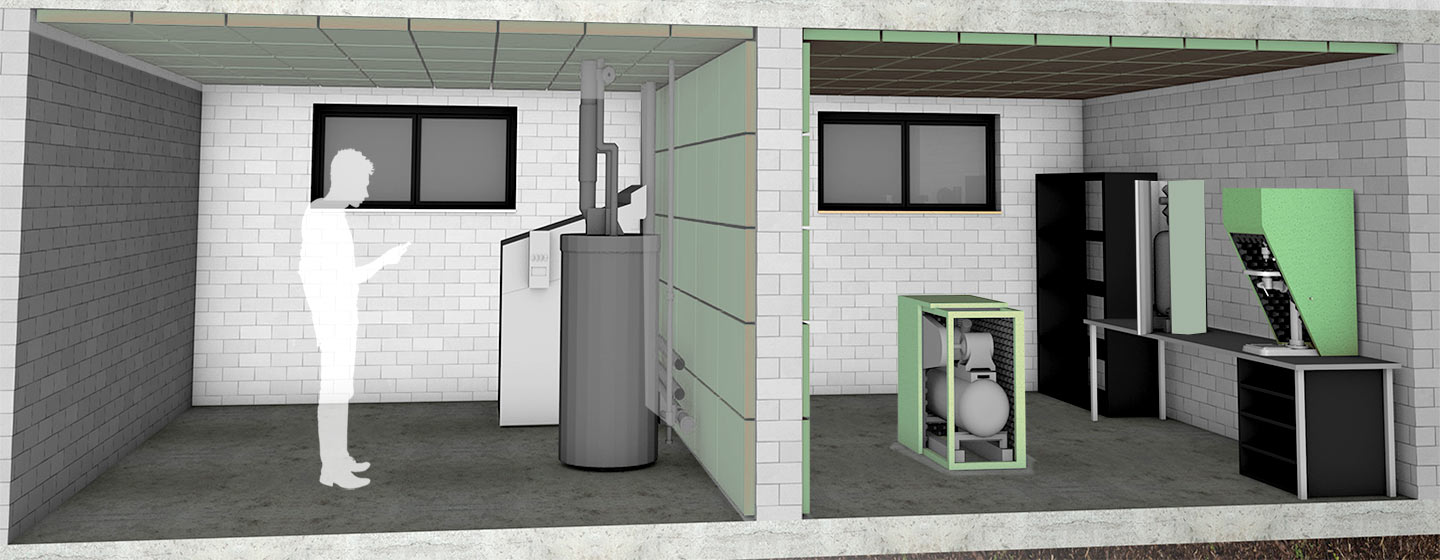
Foams can also be part of an acoustic solution for heat pumps, compressors, ventilation systems, pool pumps and other technical equipment. They are used, for example, to absorb sound inside housings or technical rooms.
Medical Technology
In diagnostic devices, laboratory equipment and other technical systems, acoustic foams can help reduce disruptive operating noise and improve the acoustic conditions for users and patients.
Room Acoustics
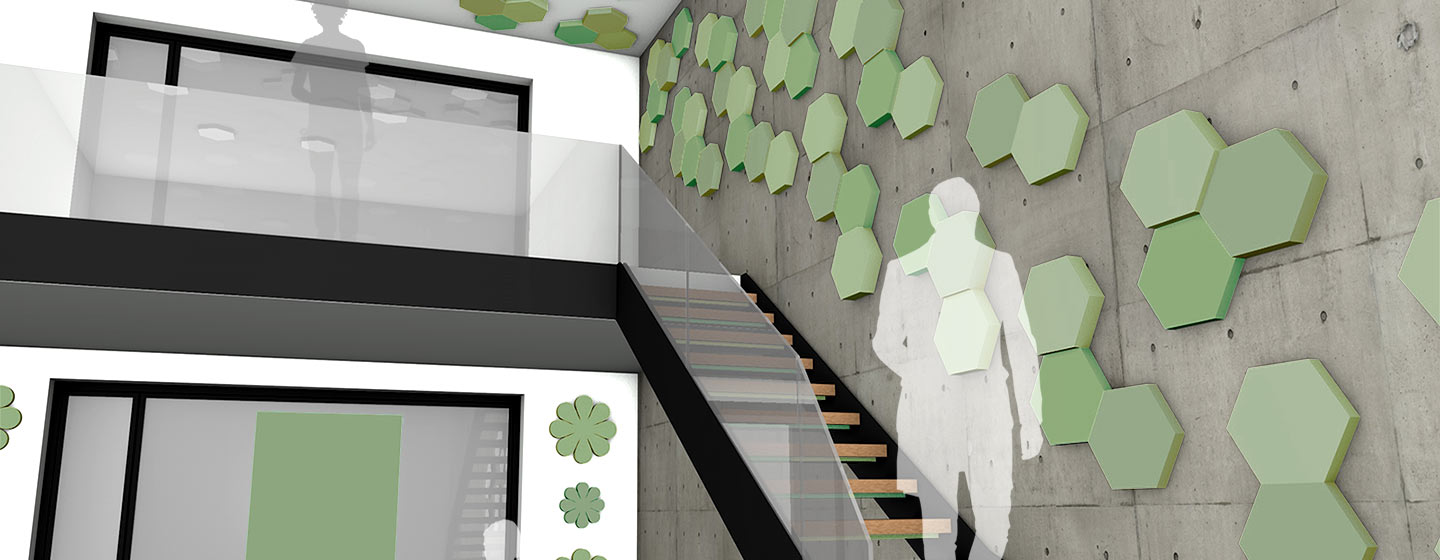
In offices, meeting rooms, recording studios, schools, kindergartens, public buildings and residential spaces, foams or absorber elements made from foam are used to reduce reverberation and disruptive sound reflections. This can improve speech intelligibility and acoustic comfort, for example.
Shape and Surface of Foam Materials
Acoustic foams are available in a variety of shapes and surface structures. Smooth surfaces, convoluted, pyramid or other profiled structures influence the acoustic performance and can also be adapted to the respective installation situation.
Thickness and installation method also play an important role. Depending on the frequency range and the desired absorption performance, different material thicknesses may be required. At low frequencies, for example, thin foam absorbers reach their limits more quickly than at medium and high frequencies.
For this reason, the selection of a foam should always be based on the specific acoustic requirements and the respective frequency range.
Foam Materials as Part of Soundproofing Solutions
Foam materials are an important component of modern acoustic solutions; however, their performance should always be considered in conjunction with the overall construction. For comprehensive soundproofing, heavy foils, nonwoven materials, decoupling elements or multilayer composite materials can be used in addition to sound-absorbing foams.
Which combination makes sense depends, among other things, on the sound source, frequency spectrum, available installation space and requirements regarding weight, temperature, fire performance and resistance.
The Most Important Facts About Foam Materials at a Glance
Foam materials offer a wide range of possibilities for acoustic optimization. Open-cell acoustic foams are particularly suitable for absorbing airborne sound and reducing reflections and reverberation. Different materials, thicknesses, densities and surface structures allow them to be adapted to a wide variety of applications.
From machinery and vehicle acoustics to technical equipment and room acoustics, foam materials are therefore a versatile component for /b>sound absorption and technical soundproofing.
Content: 0.5 m² (€25.80* / 1 m²)
Content: 0.5 m² (€41.80* / 1 m²)
Content: 0.5 m² (€0.00* / 1 m²)
Content: 0.5 m² (€99.80* / 1 m²)
Content: 0.5 m² (€27.80* / 1 m²)
Content: 0.5 m² (€19.80* / 1 m²)