
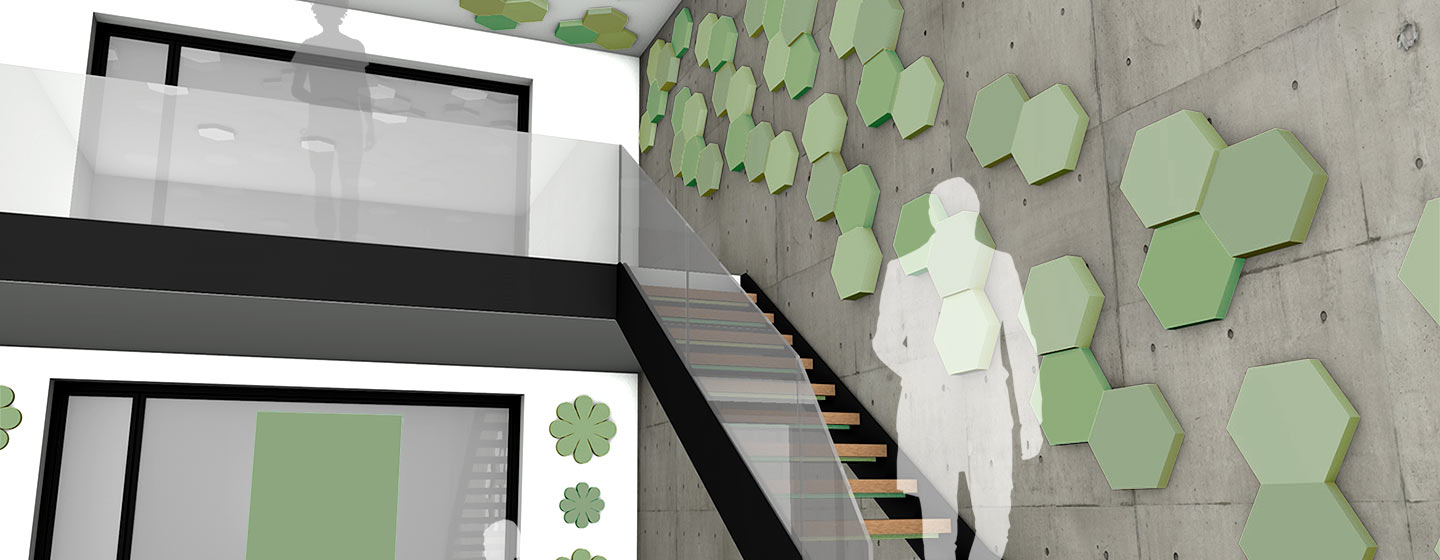



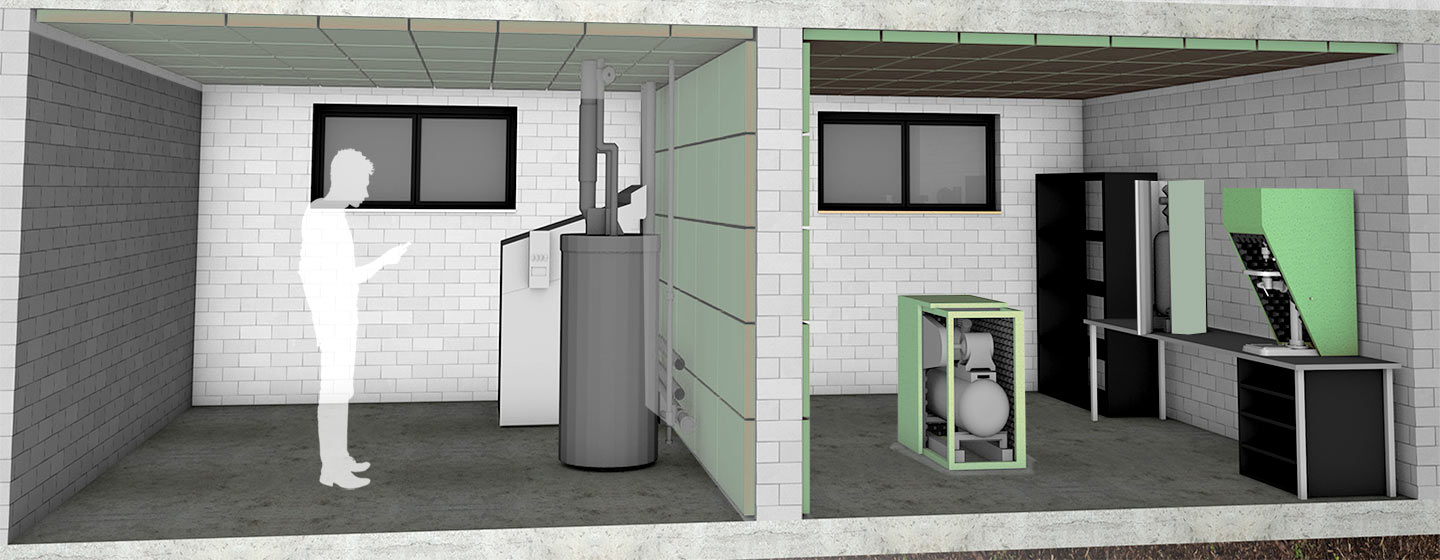

Absorption
Absorption – what does that actually mean in the field of noise protection?
When we talk about absorption in acoustics, we are referring to how well a material ‘absorbs’ sound. Simply put, sound waves hit a surface and are either transmitted, reflected or absorbed. Absorbent materials ensure that sound energy disappears into the material – usually by converting it into minimal heat. . This results in less echo and makes the room sound much more pleasant.
How does sound absorption work?
Imagine sound spreading through a room like tiny waves. When these waves hit acoustic materials such as foam or fleece, the sound penetrates their porous structure. The tiny air movements in the material rub against the pores, causing some of the energy to be ‘lost’.
The result: less reverberation, less noise, better room acoustics.
Typical areas of application in everyday life
Absorption plays an important role in many situations – not only in industry, but also in private life.
For example:
For the home
• Reducing reverberation in the living room, home office or hobby room: Ideal if rooms seem ‘bare’ or voices echo
strongly.
• Improving speech intelligibility: Bparticularly helpful in rooms with many hard surfaces such as tiles or glass.
• More pleasant acoustics in children's rooms: reduces noise levels and ensures quieter rooms.
For hobbies and music
• Home studios: absorbers help to minimise disturbing reflections and achieve clearer recordings.
In the technical field
• Machine or bonnet insulation
• Interiors in workshops or garages
Typical materials for sound absorption
At soniflex, you will find various types of materials that are perfect for private and hobby use:
• Acoustic foams
Lightweight, flexible and ideal for reducing reverberation in indoor spaces..
• Broadband absorbers (combinations of foams and heavy layers)
For areas where both higher and lower frequencies need to be dampened.
• Soundproofing fleece
Stable, lightweight and versatile for use on walls, ceilings or the backs of furniture.
Why is absorption so important?
Without absorbers, sound waves ‘bounce’ back and forth between walls, ceilings and floors. This leads to:
• Unpleasant reverberation
• Poor speech intelligibility
• Stressful room acoustics
• Higher subjective noise perception
With the right absorbers, you can significantly reduce these effects – for more peace, comfort and well-being.
Absorption vs. sound insulation – a brief note
Absorbers improve the acoustics in a room – but they do not prevent noise from escaping through the walls. Sound insulation requires other measures such as mass, decoupled components or special insulation boards.
Conclusion
Absorption is one of the most important components for good room acoustics. With the right soniflex products, you can make rooms more pleasant, quieter and more comfortable – whether it's your living room, office or hobby room.
FAQ – Frequently asked questions about absorption
What exactly is sound absorption?
Sound absorption means that sound waves are absorbed and attenuated by a material. This results in fewer reflections in the room, shorter reverberation times and a quieter, more pleasant overall sound in the room.
Which materials absorb sound particularly well?
Open-cell, porous materials are very well suited, for example:
• Acoustic foams
• Acoustic fleece
• Acoustic panels made of foam or fibre material
These materials allow sound to penetrate their structure, where it is converted into minimal heat.
Does sound absorption make a room soundproof?
No. Sound absorption improves the acoustics within a room, but does not prevent noise from escaping to the outside or entering from the outside. Additional structural measures are necessary for true sound insulation.
Where should I install absorbers in the room?
Installation is particularly effective:
• on walls opposite sound sources
• on the ceiling in cases of strong reverberation
• on large, free wall surfaces
Even a few strategically placed acoustic elements can bring about a significant improvement.
Which frequencies are attenuated by absorption?
Standard absorbers work particularly well in the mid and high frequency ranges, i.e. for speech, music and everyday noises. Low frequencies (bass) require special bass absorbers or thicker materials.
How much absorption material do I need?
That depends on the size of the room, its use and the desired effect. As a rule of thumb:
The larger and more bare the room, the more absorption surface area is needed.
It is often sufficient to cover 20–30% of the wall or ceiling area with acoustic elements.